Thinking
An Honorary Mention at the Compasso d'Oro for the Local Health Authority website model
The project developed with Designers Italia for the Department for Digital Transformation receives one of the most authoritative recognitions in Italian design - an important signal for those working on digital public services.
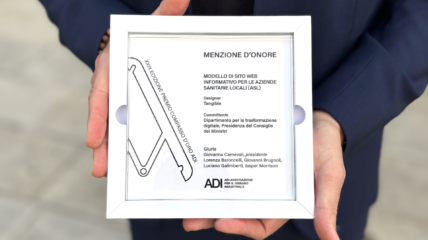
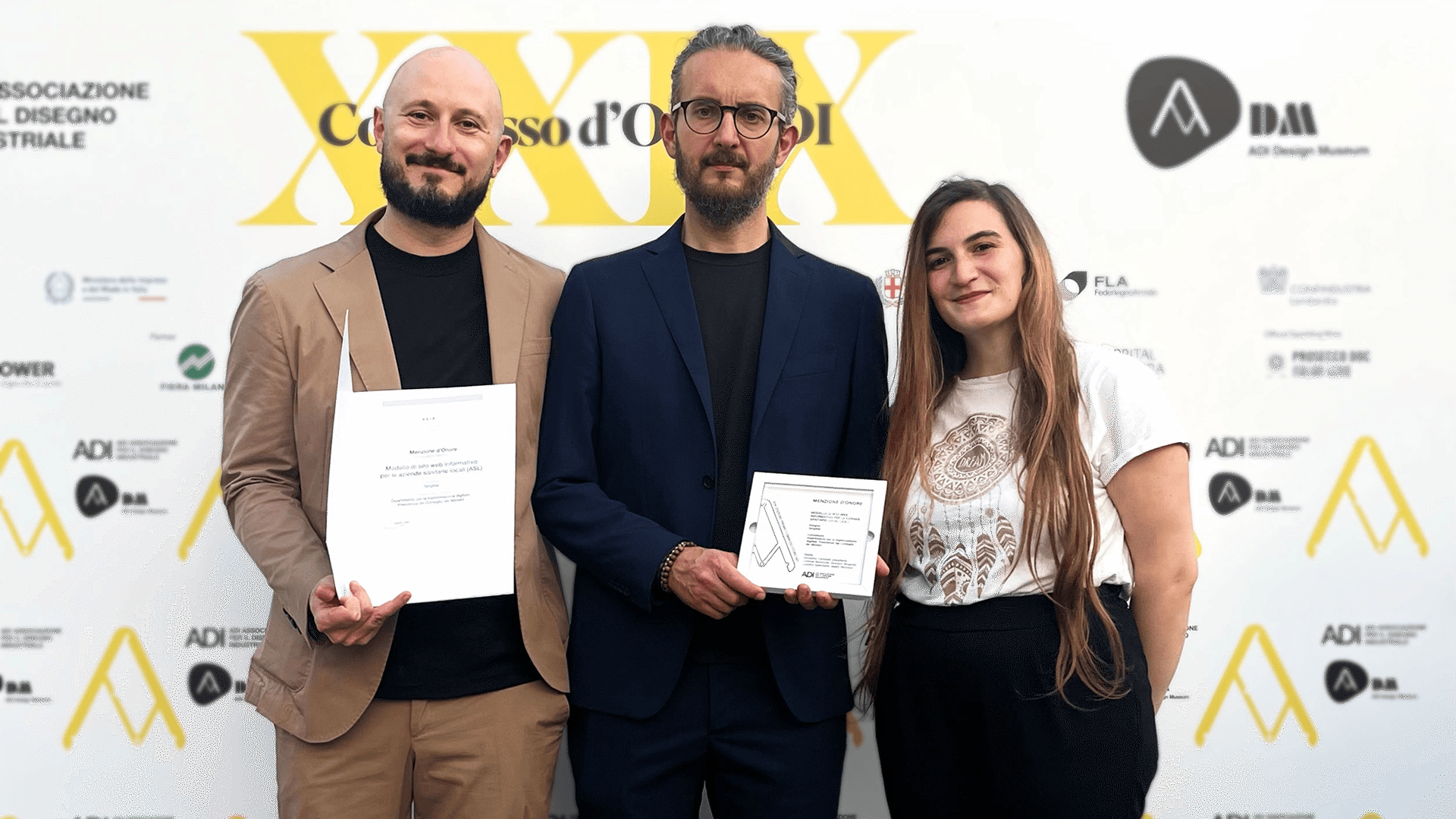
On 22 May 2026, at the ADI Design Museum in Milan, the project "Website model for local health authorities" received an Honorary Mention at the 29th Compasso d'Oro ADI Award. A recognition that comes at the end of a journey begun years ago, which became more concrete in October 2024 with its selection for the ADI Design Index.
The Compasso d'Oro has existed since 1954. It is Italy's longest-running design prize, founded on the initiative of Gio Ponti and La Rinascente, with the idea that quality design was a cultural and civic matter before it was ever a commercial one. Over seventy years, it has witnessed profound shifts in the Italian production system - from the economic boom to industrial decline, from craft to digital services.
Receiving it for an institutional website model is not the obvious conclusion of that story. It is, if anything, a signal.
Designing for those who have no alternatives
The project starts from a concrete question: how can Italian local health authorities - bodies that differ enormously in size, resources, and technical capacity - offer their users a coherent, accessible, and understandable digital experience?
The answer we built together with Designers Italia, on behalf of the Department for Digital Transformation, is not a website. It is a model: a set of components, guidelines, navigation patterns, and accessibility criteria built on the Designers Italia Design System, available as open source, and adaptable by any ASL or supplier independently.
Behind that model lies a research process conducted with real users through interviews, workshops, and benchmarking sessions. At the center: a specific category of people defined by one characteristic - they access a healthcare portal at a moment when the stakes are high, their own health or that of someone they care about.
Elderly people looking for how to book an appointment. Caregivers managing someone else's health. People navigating with little time and little tolerance for error.
Designing for them means designing with no margin for ambiguity. There is no simpler digital alternative to fall back on - there is only that website, and a citizen who needs to find what they are looking for.
The weight of a recognition
The 29th Award assigned 38 Honorary Mentions, selected by an international jury from submissions spanning industry, public administration, and design research. There are no categories: all projects compete on equal terms.
That a model for the institutional websites of local health authorities appears on that list says something precise. It says that designing a public service with rigor and method produces design in every sense - with a direct, daily impact on people's lives.
This project is part of a body of work that Designers Italia has been developing for years - first the model for municipalities, then for schools, now for ASLs. Each step is an infrastructure that remains invisible, yet changes the experience of millions of people.
The Compasso d'Oro gives it visibility.
Continuing down this road
This is what Nicolò Volpato, captures well, summarizing the meaning of this work: "It is a special satisfaction to see a public service project recognized - one that is genuinely useful, open, shared, designed for everyone, and that has always centered a sense of service, responsibility, and care for the people who will use it. In the case of ASLs, we are talking about millions of citizens."
This is not rhetoric. It is a design position: design for public administration, especially at this scale, must be approached with quality and method - because the consequences of poor design fall on those who did not choose to use that service, but simply have to.
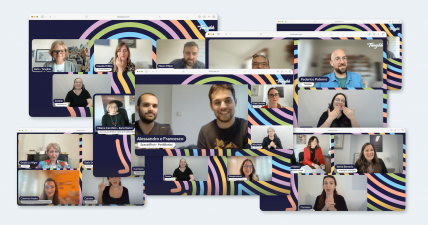
We share this recognition with the team that worked on the project - Nicolò Volpato, Manuele Forcucci, Caterina Amato, Ilenia Baronio, Francesco Paradiso, Antonio Matera - and with our colleagues at Designers Italia: Simone Jacca, Federico Giaimo, Francesco Improta, Daniele Nolè, Ilaria Scarpellini, and Marco Maria Pedrazzo.
And with anyone else out there working toward the same thing: making digital public services worthy of the people who use them.