Salone del Mobile.Milano
From field research to redefining the digital experience of one of the most iconic events in the furniture and design industry
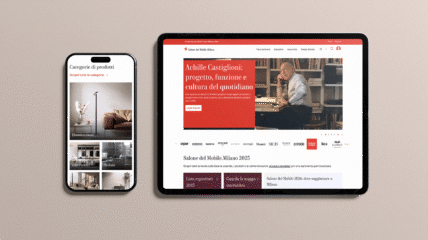
The collaboration between Tangible and the Salone del Mobile.Milano began in mid-2023 with a clear objective: to rethink the digital experience for visitors and exhibitors at their most important moments of interaction.
In this initial phase, we worked on redesigning the purchasing, login and registration funnels, and the exhibitor catalogue. The results achieved and the trust built allowed us to embark on a broader and more strategic path for the following years, always in close collaboration with the Salone del Mobile digital team.
Objectives
Building on the initial phase, we expanded the work with even more ambitious goals:
- Gain a deep understanding of how people experience Salone del Mobile.Milano, integrating physical and digital touchpoints
- Rethink the navigation, homepage and members-only areas of the site to make them more intuitive, customisable and adaptable to different times of the year
- Facilitate the adoption of digital tools by exhibitors
- Support visitors by building a more personalised and continuous on-site visitor experience at the fair.
Main challenges
Working on the digital experience of an event of this scale presented us with a number of specific challenges, which we addressed while always seeking a balance between design rigour and adaptability. The first complexity was related to the very nature of the event itself: a strongly phygital context, where what happens in the physical space and what happens online are closely intertwined. Gathering authentic insights meant observing behaviours that move fluidly between these two planes, without a clear distinction.
There was also the need to maintain a balance between business needs and the quality of the user experience. Working with an event of global scope means engaging with ambitious objectives, time constraints and a wide variety of stakeholders, and this required us to continuously synthesise strategic vision with the real needs of people.
Another challenge was to design solutions that were scalable and sustainable over time, capable of adapting to an evolving digital ecosystem while also being manageable internally by the Salone del Mobile team, without introducing operational complexities.
Finally, we worked within established technical, legal and brand constraints: elements that may not always be visible to users, but which are essential to ensure consistency, security and continuity. Our approach was to integrate them into the design process without allowing them to hinder innovation, turning them instead into opportunities to build a solid foundation for the growth of new experiences.
Results
The work led to a significant renewal of the main areas of the site:
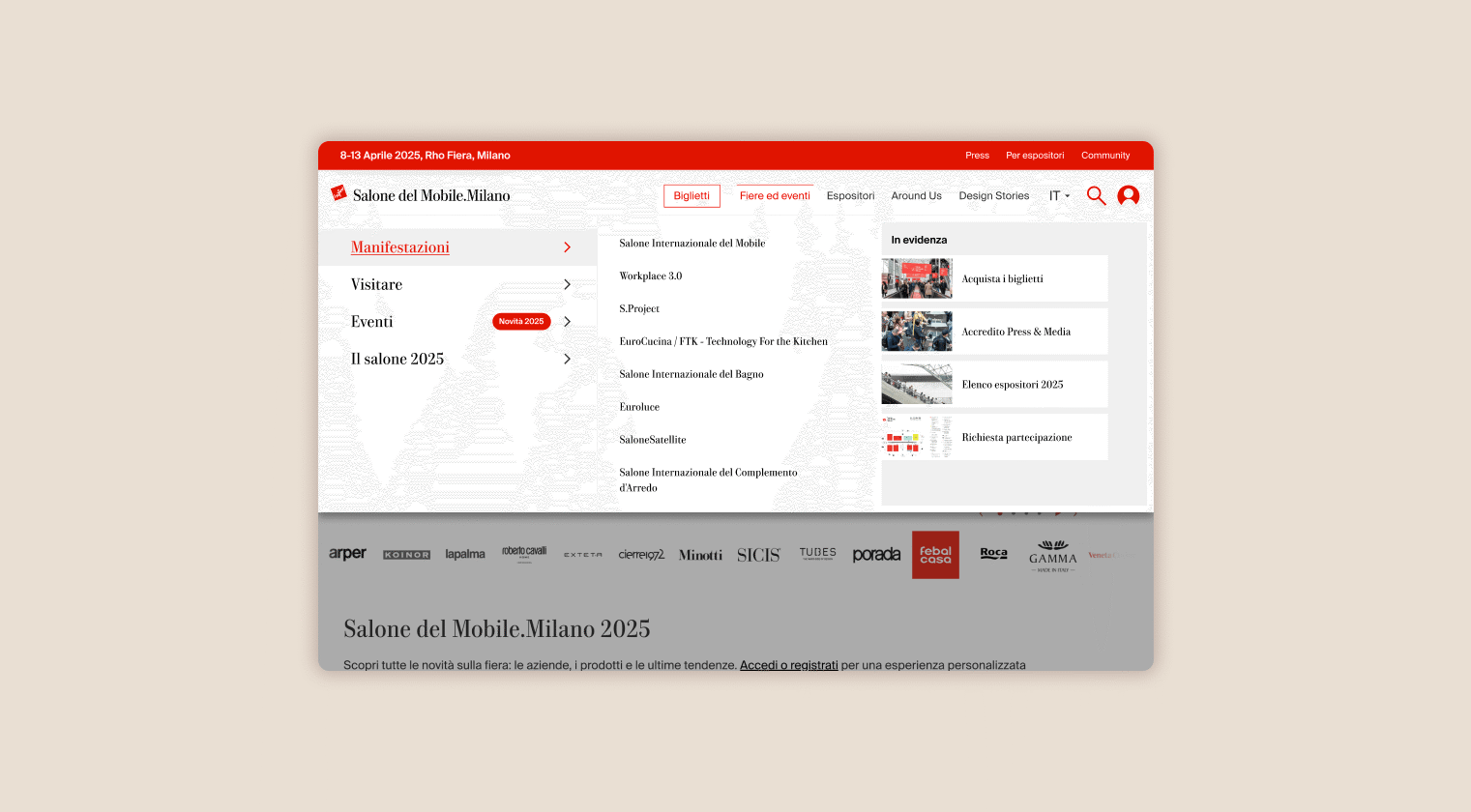
- A new navigation model simplifies access to the most relevant content and allows the digital team to independently manage dynamic spaces and editorial highlights
- The homepage was redesigned to better showcase exhibitors and partners, offering a personalised experience for authenticated users and adapting to different times of the year
- The members-only areas for exhibitors and visitors were completely redesigned, now centralising information and simplifying access to digital services, improving fair preparation, the visitor experience and management of activities during the event.
Process
Field research during the Salone del Mobile 2024
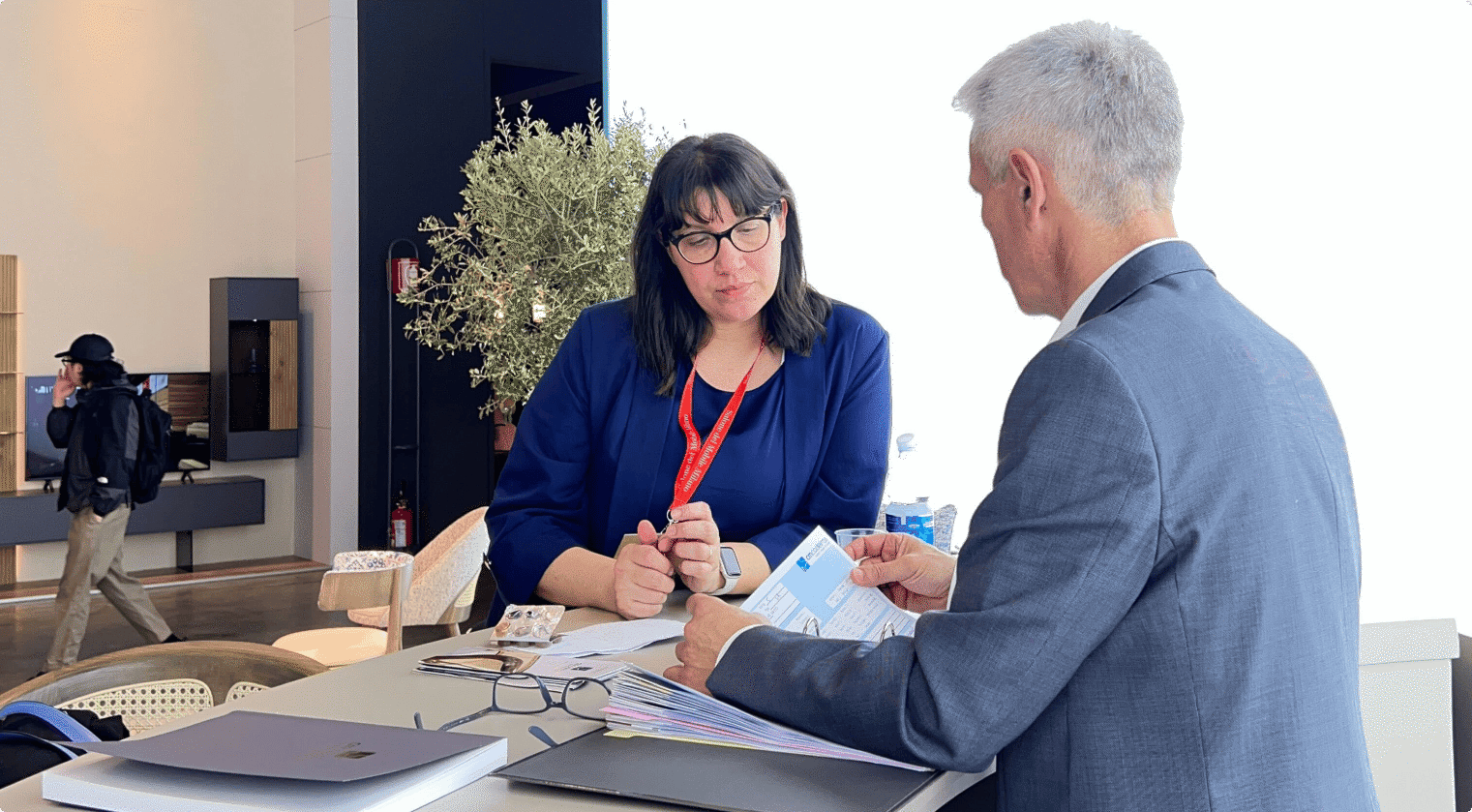
We decided to start this second phase of the work by experiencing the 2024 edition of the fair first-hand. For a few days, the focus of our work became the fair itself: its spaces, interactions, movements, devices used, moments of waiting and orientation.
We conducted field research using multiple methodologies, specifically:
- Through Shadowing, we followed visitors closely as they entered the fair and interacted within the stands, capturing their dynamics and points of contact with digital services in real time. This direct observation proved crucial in understanding how visitors integrate the physical experience of the fair with the digital tools provided.
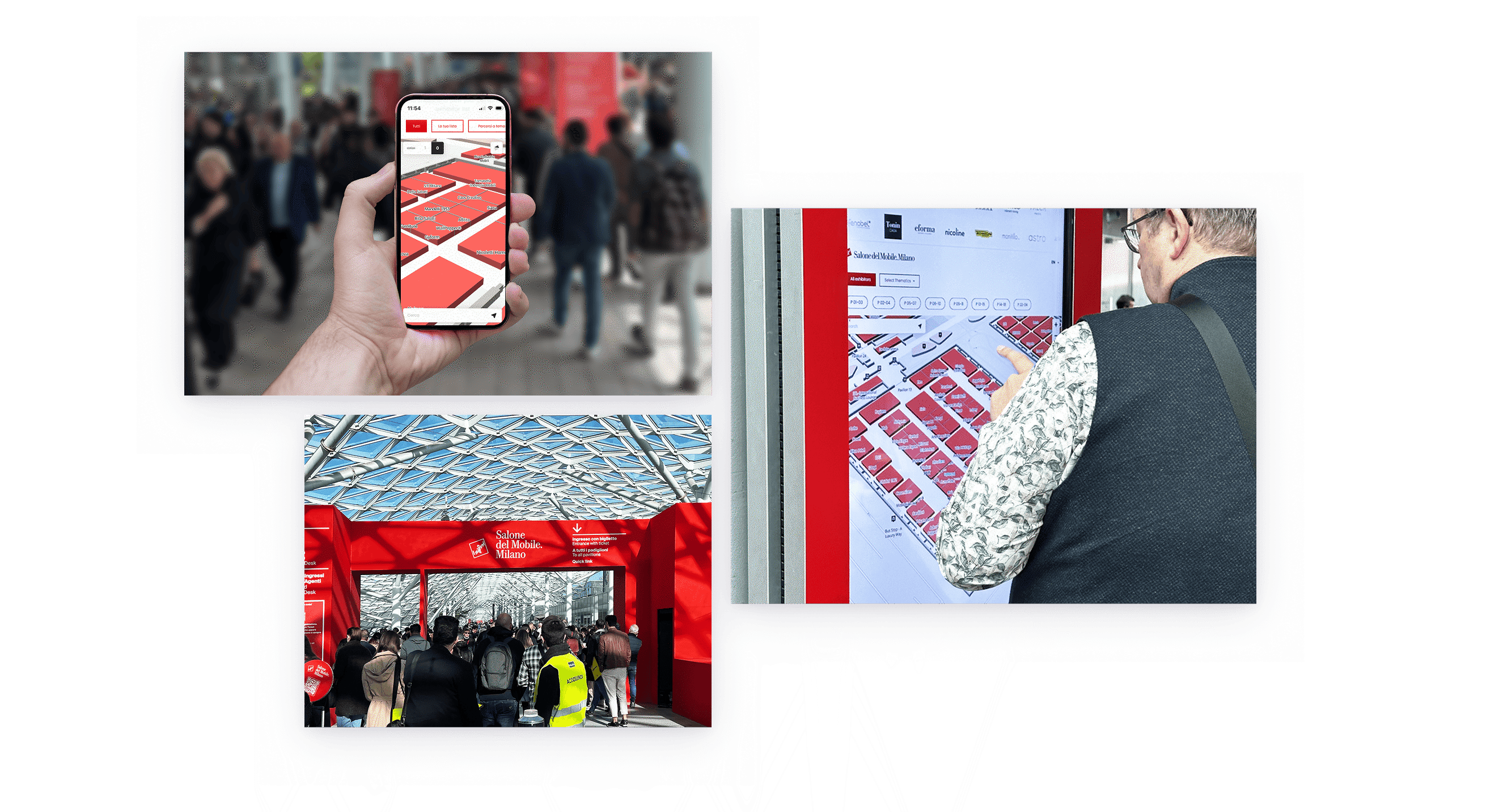
We observed, for example, how they use apps to find their way around, search for information on exhibitors or save their favourite stands, clearly highlighting phygital behaviour, where the boundary between the physical and digital worlds is becoming increasingly blurred and interconnected. Understanding this hybrid flow is key to designing services that effectively meet the real needs of visitors, creating a seamless experience between exploring exhibition spaces and using digital resources. - Intercept sessions provided a crucial opportunity to engage directly with visitors and exhibitors. Through targeted interviews, we gathered explicit information on their stated needs, expressed desires and the most evident pain points encountered during the visit, ranging from appointment organisation to the practical use of the interactive maps.
However, the value of these sessions went beyond simply collecting direct feedback. By asking open-ended questions and carefully observing the answers, we also tried to bring out unspoken needs; those latent or unconscious needs that the users themselves may not find easy to articulate. - The Service Safari proved to be a valuable activity for our team. Rather than just observing from the outside, we wanted to step into users’ shoes, experiencing first-hand the digital services available during the event. This hands-on immersion included the use of interactive maps to navigate the exhibition complex and the use of other features designed to support the visit.
The main objective of this methodology was to directly and immediately identify areas with room for improvement in terms of user experience, but also to uncover new opportunities to enrich and optimise the digital offering. By experiencing the services first-hand, we were able to pick up on nuances and pain points that are unlikely to emerge through interviews or external observations alone.
In total, we worked in the field with three researchers, collected almost 40 hours of observation and active listening, interviewed almost 100 users, including both visitors and exhibitors, and gathered insights that added depth to the project.
Insight sharing and definition of priority workstreams
Everything we collected was then shared in a structured way with the working group overseeing the digital ecosystem of the Salone. It was not a simple reporting back, but a process of analysis and alignment carried out together. We linked qualitative evidence and recurring patterns with existing strategic objectives.
From this dialogue it became clear which design workstreams we should focus on: navigation, the homepage, members-only areas.
We defined priorities by balancing people's needs with business direction, deciding where to intervene first and at what depth.
Design and development
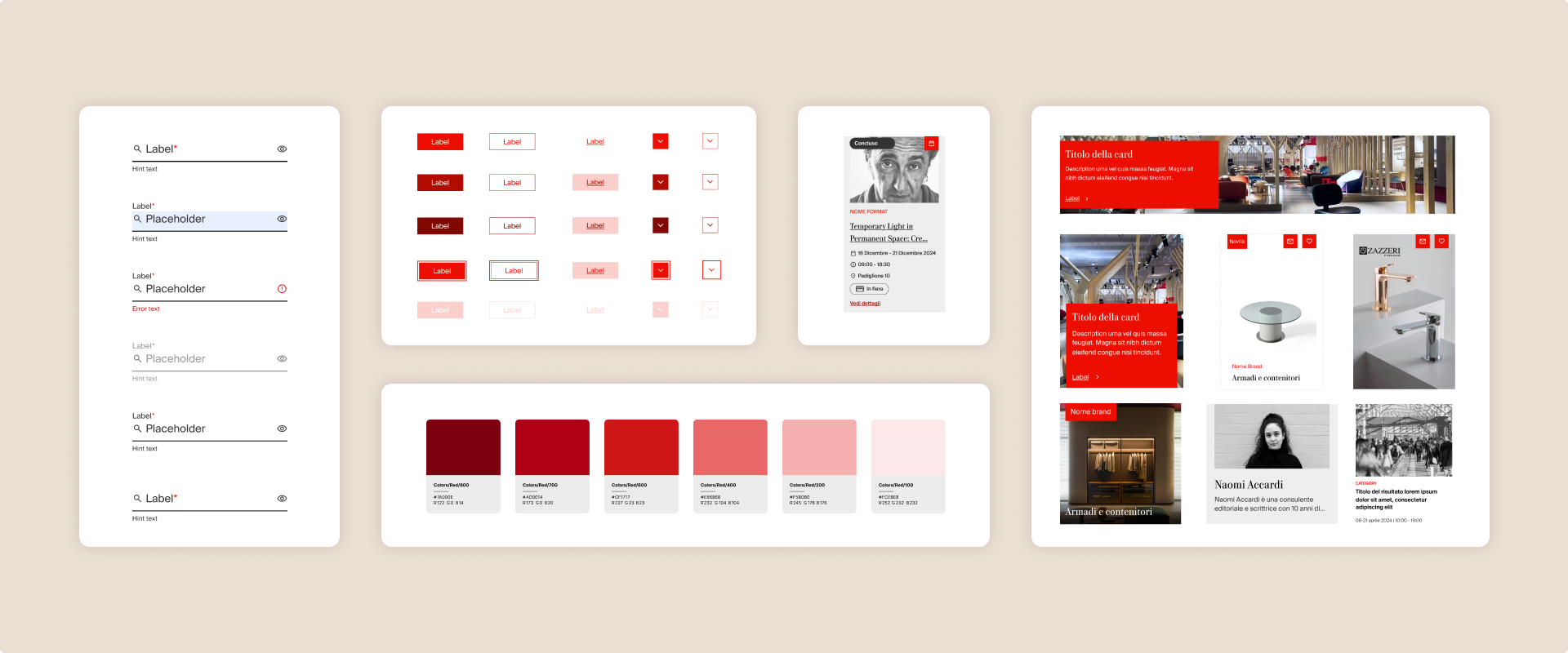
Each workstream began with a dedicated kick-off aimed at gathering technical, legal and brand constraints and defining functional requirements. We worked in codesign mode, developing the information architecture and initial concepts together with the internal contacts at the Salone del Mobile.
Each proposal was shared in review sessions with stakeholders, feedback was collected, and revised iteratively to refine the design direction. Only then did we move on to detailed design, where we defined every aspect of the experience, from interaction to microcopy.
The development phase was followed by Quality Assurance and User Acceptance Testing activities to ensure consistency, functionality and usability of the new sections of the site before going online.
A shared journey
Working alongside the Salone del Mobile digital team allowed us to enter a complex, dynamic and evolving ecosystem. We brought service design tools into a context where the quality of the experience is tested every year, over a few intense days, but is built with care and consistency over time.
Listening in the field, collaborative design and the ability to transform insights into concrete decisions made this project an example of how physical and digital are not two separate worlds, but parts of a single experience. And how, to make it truly effective, it takes work that brings together strategy, organisation and attention to detail.
The workstreams we have initiated and delivered do not represent a full stop, but the first step in an ongoing journey. A journey that will continue to grow together with those who experience the Salone del Mobile every year: with different expectations, new needs, and increasingly hybrid ways of engaging with the fair and its digital tools.
The Salone del Mobile has always been an experience that connects places, ideas and people, placing them at its centre.
Working with Tangible has allowed us to bring the same centrality to the digital space, rethinking tools and services in a way that is consistent with the phygital experience of visitors and exhibitors, starting from field research and listening directly to people.
Il nostro team
Want more information about this project or would you like to discuss a similar project for your business?